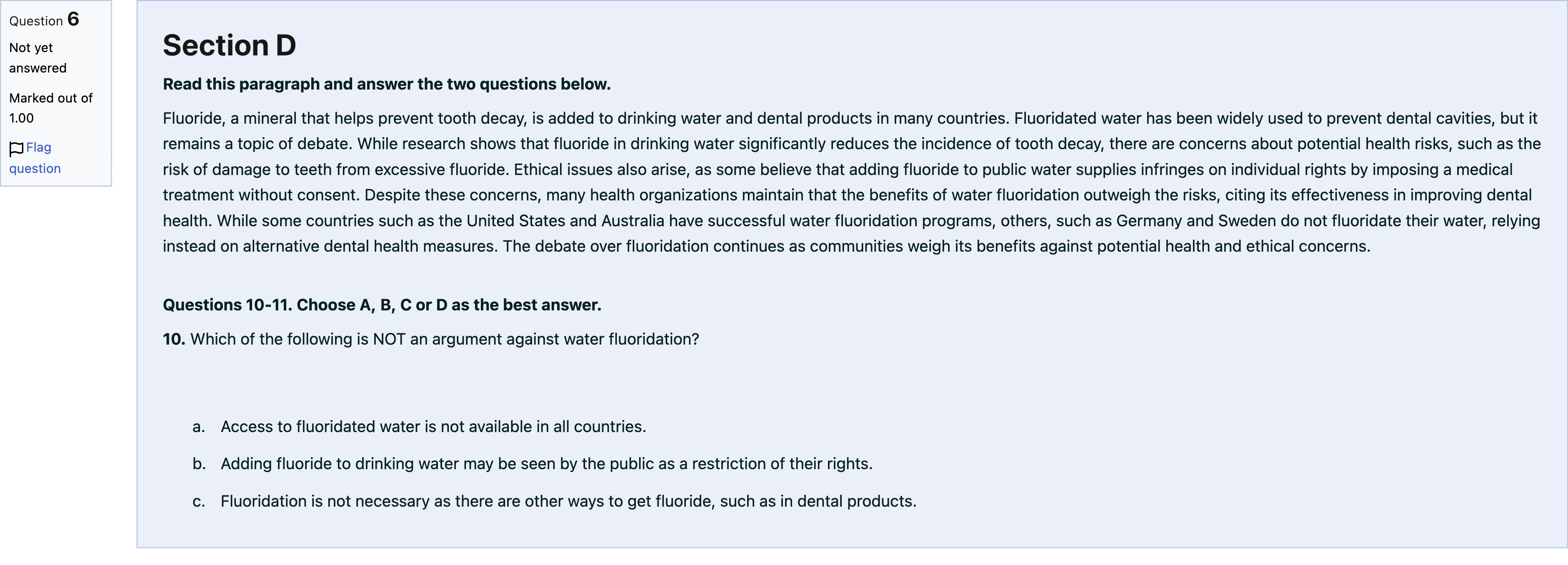
Section D Read this paragraph and answer the two questions below. Fluoride, a mineral that helps prevent tooth decay, is added to drinking water and dental products in many countries. Fluoridated water has been widely used to prevent dental cavities, but it remains a topic of debate. While research shows that fluoride in drinking water significantly reduces the incidence of tooth decay, there are concerns about potential health risks, such as the risk of damage to teeth from excessive fluoride. Ethical issues also arise, as some believe that adding fluoride to public water supplies infringes on individual rights by imposing a medical treatment without consent. Despite these concerns, many health organizations maintain that the benefits of water fluoridation outweigh the risks, citing its effectiveness in improving dental health. While some countries such as the United States and Australia have successful water fluoridation programs, others, such as Germany and Sweden do not fluoridate their water, relying instead on alternative dental health measures. The debate over fluoridation continues as communities weigh its benefits against potential health and ethical concerns. Questions 10-11. Choose A, B, C or D as the best answer. 10. Which of the following is NOT an argument against water fluoridation?单项选择题
A
a. Access to fluoridated water is not available in all countries.
B
b. Adding fluoride to drinking water may be seen by the public as a restriction of their rights.
C
c. Fluoridation is not necessary as there are other ways to get fluoride, such as in dental products.
登录即可查看完整答案
我们收录了全球超50000道真实原题与详细解析,现在登录,立即获得答案。
类似问题
Which of the following is the leading cause of preventable death in the United States?
Which is a characteristic of the U.S. government's Healthy People reports?
Recent declines in life expectancy have been linked to increased rates of which of the following?
12. Which is the best title for this mini-lecture?
更多留学生实用工具
希望你的学习变得更简单
加入我们,立即解锁 海量真题 与 独家解析,让复习快人一步!