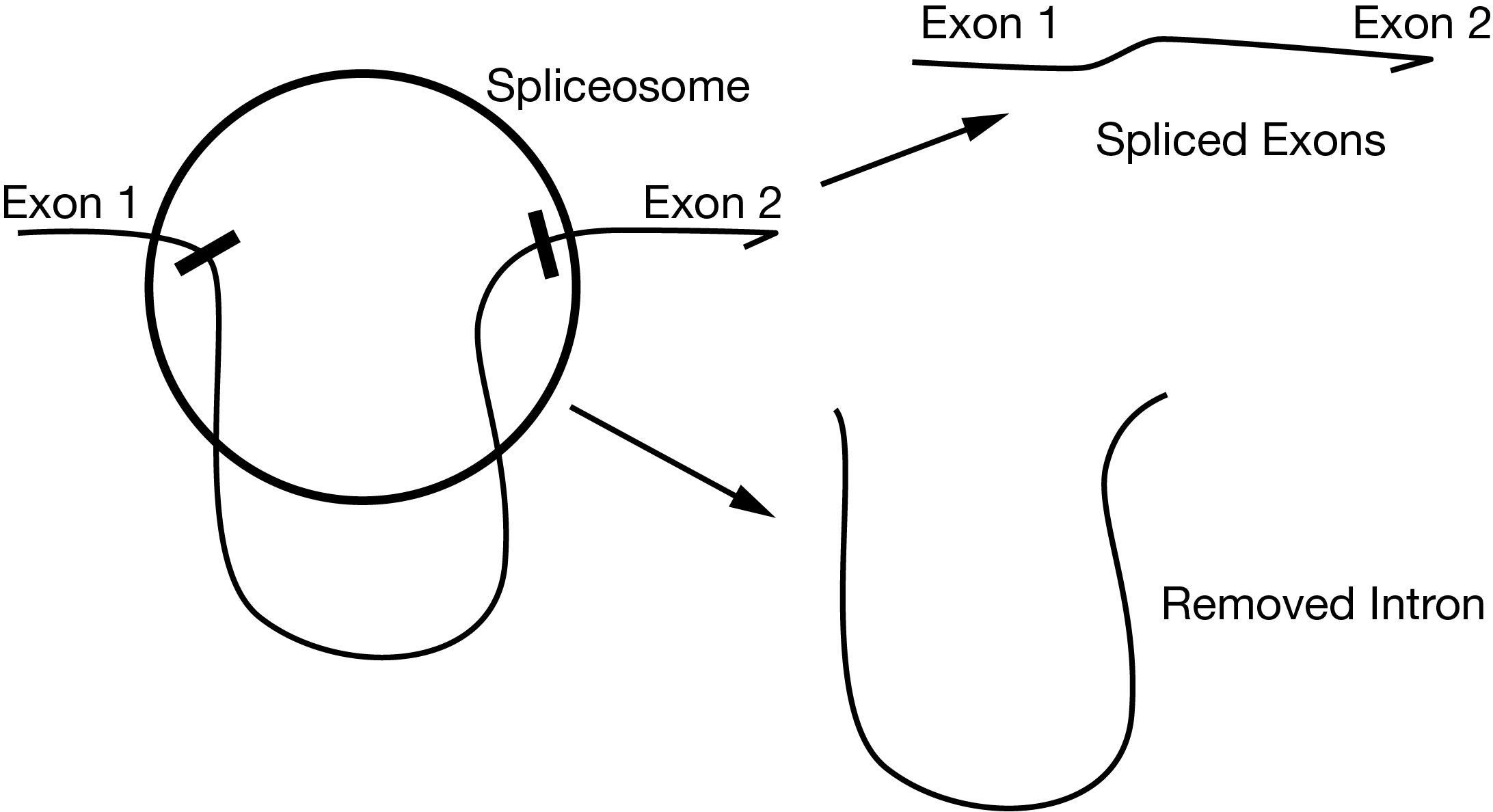
Figure 1 illustrates a process that occurs in a certain group of organisms. Figure 1. Model of spliceosome activity Which of the following best predicts the importance of this process?单项选择题
A
This process is common to all members of Eukarya and allows noncoding regions of RNA to be removed so that proteins with the correct amino acid sequence are produced.
B
This process is common to vertebrates and allows the production of large and complicated proteins.
C
This process is common to all organisms and is a conserved DNA repair mechanism.
D
This process is common to all members of Archaea and allows these organisms to survive harsh environments.
登录即可查看完整答案
我们收录了全球超50000道真实原题与详细解析,现在登录,立即获得答案。
类似问题
Figure 1 illustrates a process that occurs in a certain group of organisms. The Spliceosome is represented by a circle. A line begins to the left of the circle and that section of line is labeled Exon 1. The line moves into the circle, dips down below the circle, then curves back up into the circle, leaves the circle from the right side and at that point that section of line outside the circle is labeled Exon 2. An arrow points upward and to the right from the right end of the line to Spliced Exons that represent the combined 2 ends of the lines outside of the circle labeled Exon 1 and Exon 2. Moving back to the circle, an arrow points downward and to the right from the circle to the Removed Intron and that line represents the rest of the line that had started inside the circle and then dipped down below the circle and then curved back up into the circle. Figure 1. Model of spliceosome activity Which of the following best predicts the importance of this process?
A gene encodes a pre-mRNA with 5 exons and 4 introns. A mutation eliminates the 3’ splice site from intron 3. What exons would be found in the mRNA after splicing was completed?
In eukaryotes, what does the mRNA transcript contain?
In eukaryotic cells, the initial RNA transcript (pre-mRNA) contains non-coding segments called [ Select ] spliceosomes promoters exons introns polymerase that intervene between coding regions. Before the RNA leaves the nucleus, a large protein-RNA complex called the [ Select ] introns polymerase exons ribosomes spliceosomes removes these non-coding parts and joins the coding regions, known as [ Select ] promoters spliceosomes polymerase exons introns together. This process allows a single gene to encode multiple different proteins depending on which segments are treated as coding.
更多留学生实用工具
希望你的学习变得更简单
加入我们,立即解锁 海量真题 与 独家解析,让复习快人一步!