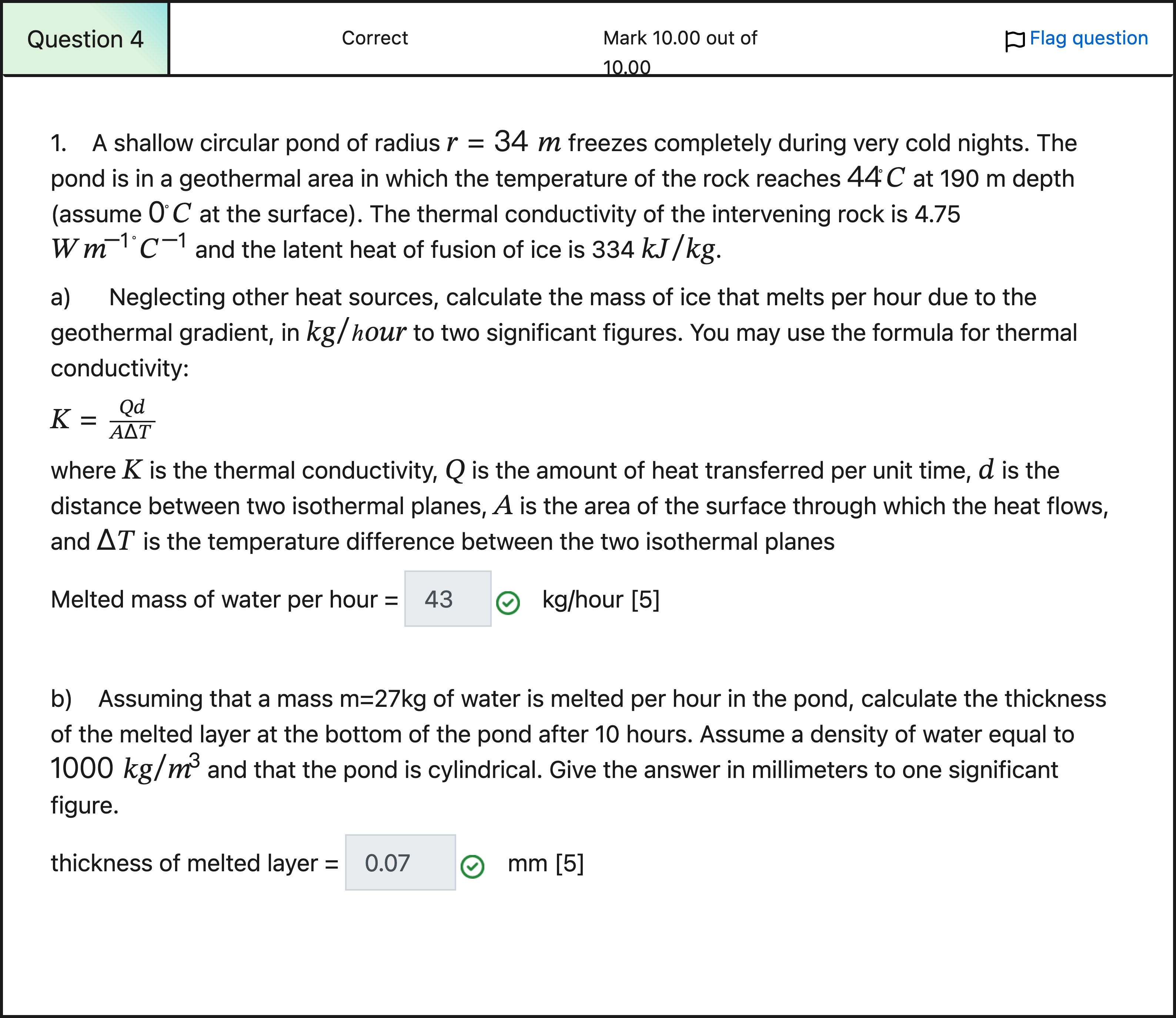
Question text1. A shallow circular pond of radius freezes completely during very cold nights. The pond is in a geothermal area in which the temperature of the rock reaches at 190 m depth (assume at the surface). The thermal conductivity of the intervening rock is 4.75 and the latent heat of fusion of ice is 334 . a) Neglecting other heat sources, calculate the mass of ice that melts per hour due to the geothermal gradient, in to two significant figures. You may use the formula for thermal conductivity:where is the thermal conductivity, is the amount of heat transferred per unit time, is the distance between two isothermal planes, is the area of the surface through which the heat flows, and is the temperature difference between the two isothermal planesMelted mass of water per hour = Answer 1 Question 4[input] kg/hour [5] b) Assuming that a mass m=27kg of water is melted per hour in the pond, calculate the thickness of the melted layer at the bottom of the pond after 10 hours. Assume a density of water equal to and that the pond is cylindrical. Give the answer in millimeters to one significant figure. thickness of melted layer = Answer 2 Question 4[input] mm [5]Multiple fill-in-the-blank
Log in for full answers
We've collected over 50,000 authentic original questions and detailed explanations from around the globe. Log in now and get instant access to the answers!
Similar Questions
A cubic box is being used as an insulator to store soup and keep it hot on a cold day. The wall thickness of the insulator is halved. The exposed area is decreased to a quarter. What would happen to the rate of heat loss?
Generally, metals are the best
The handle of a saucepan should be
Conduction is the transfer of heat energy by:
More Practical Tools for Students Powered by AI Study Helper
Making Your Study Simpler
Join us and instantly unlock extensive past papers & exclusive solutions to get a head start on your studies!