Goldenrod gall flies (Eurosta solidaginis) lay their eggs individually in developing shoots of the tall goldenrod plant (Salidago). When it hatches, the fly larva makes a chemical the causes the plant tissue to swell around it, forming a mass of plant tissue called a gall, which serves as a home for the larva. Downy woodpeckers attack large galls and eat the gall fly larva. Parasitic wasps lay eggs inside small galls and the wasp larvae that hatch from the eggs eat the gall fly larva when it hatches. Only galls of intermediate size remain intact because the wall of the gall is too thick for the ovipositor of a parasitic wasp to penetrate, and the size of the gall and hence the larva within makes it less attractive to woodpeckers than a larger gall containing a larger larva and hence a larger meal. Which graph best depicts the type of selection occurring in this gall fly population?Single choice
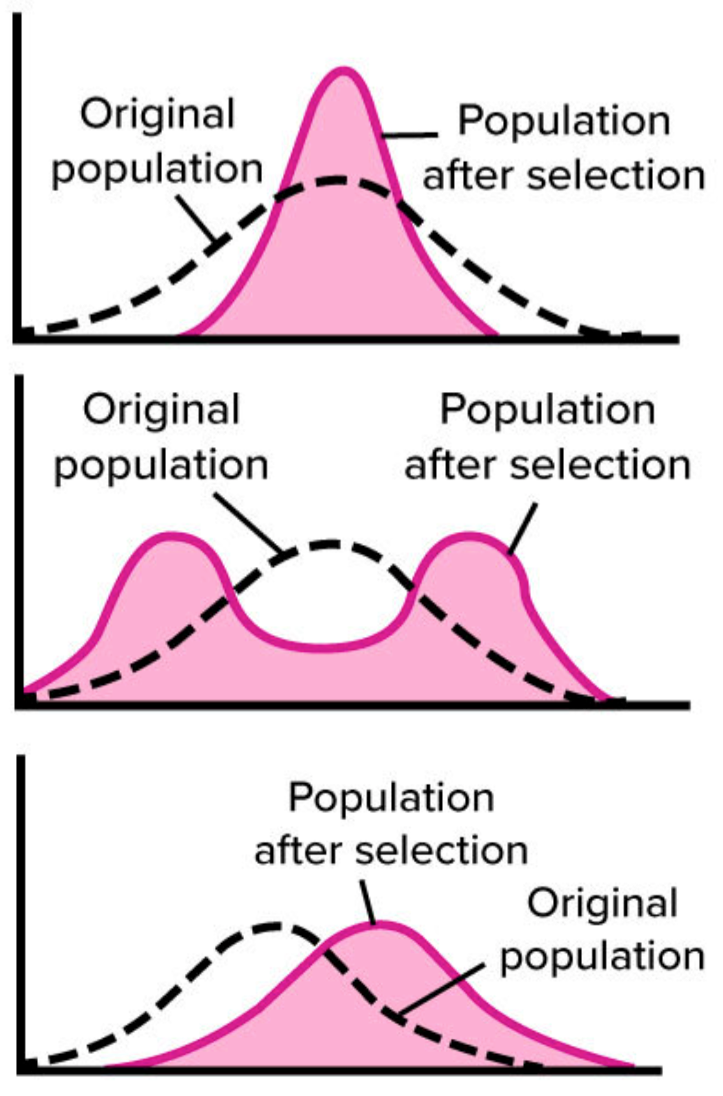
A
None of these graphs is correct.
Log in for full answers
We've collected over 50,000 authentic original questions and detailed explanations from around the globe. Log in now and get instant access to the answers!
Similar Questions
Male deer compete for mates by fighting with their antlers. The male deer with the largest antlers tend to secure the most mates. Why do we not see a large number of male deer with super large antlers?
Stabilizing selection tends to genetic diversity within a population.
The type of natural selection that favors individuals with intermediate phenotypes and selects against those with extreme phenotypes is called selection.
Question at position 23 Most Swiss starlings produce four to five eggs in each clutch. Starlings producing fewer, or more, than this have reduced fitness. Which of the following terms best describes this situation?diversifying selectionartificial selectiondirectional selectionstabilizing selectionClear my selection
More Practical Tools for Students Powered by AI Study Helper
Making Your Study Simpler
Join us and instantly unlock extensive past papers & exclusive solutions to get a head start on your studies!