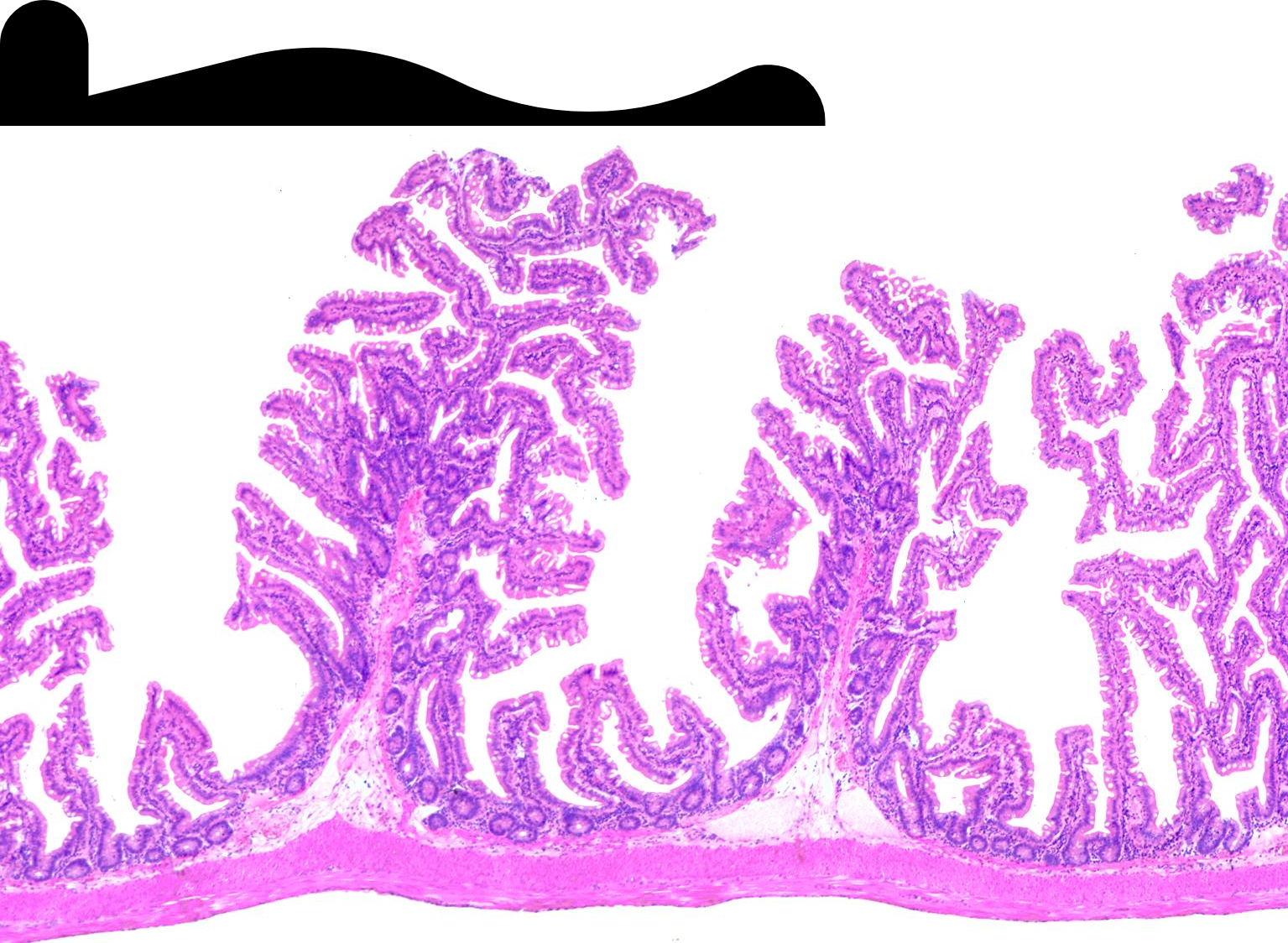
This is an example of a drop-down question, similar in style to that in the mid-sem quiz. However, the questions in the quiz will not be as long as this one! Maximising surface area A key function of the small intestine is to absorb nutrients from digested food. There are a number of specialisations of the small intestine that allow it to do this. Firstly, the small intestine (duodenum, jejunum and ileum) is very long. Secondly, there are a number of smaller and larger projections of cells and tissues that increase the surface area. Particularly noticeable in the jejunum are Blank 1 Question 3[select: , Plicae ciculares, Brush border, Villi, Microvilli] that are folds of the second layer of the gastrointestinal tissue (the Blank 2 Question 3[select: , Muscularis mucosa, Mucosa, Submucosa] ). On top of these are finger-like projections of the Blank 3 Question 3[select: , Muscularis mucosa, Mucosa, Submucosa] called Blank 4 Question 3[select: , Plicae ciculares, Brush border, Villi, Microvilli] . On the enterocytes (absorptive cells) of the epithelial layer are many projections of the cell membrane called Blank 5 Question 3[select: , Plicae ciculares, Brush border, Villi, Microvilli] . This is also called a Blank 6 Question 3[select: , Plicae ciculares, Brush border, Villi, Microvilli] . It is formed from intracellular projections of Blank 7 Question 3[select: , actin microfilaments, microtubules, intermediate filaments] .Multiple dropdown selections
Log in for full answers
We've collected over 50,000 authentic original questions and detailed explanations from around the globe. Log in now and get instant access to the answers!
Similar Questions
This is an example of a drop-down question, similar in style to that in the mid-sem quiz. However, the questions in the quiz will not be as long as this one! Maximising surface area A key function of the small intestine is to absorb nutrients from digested food. There are a number of specialisations of the small intestine that allow it to do this. Firstly, the small intestine (duodenum, jejunum and ileum) is very long. Secondly, there are a number of smaller and larger projections of cells and tissues that increase the surface area. Particularly noticeable in the jejunum are Blank 1 Question 3[select: , Villi, Plicae ciculares, Microvilli, Brush border] that are folds of the second layer of the gastrointestinal tissue (the Blank 2 Question 3[select: , Submucosa, Muscularis mucosa, Mucosa] ). On top of these are finger-like projections of the Blank 3 Question 3[select: , Submucosa, Muscularis mucosa, Mucosa] called Blank 4 Question 3[select: , Villi, Plicae ciculares, Microvilli, Brush border] . On the enterocytes (absorptive cells) of the epithelial layer are many projections of the cell membrane called Blank 5 Question 3[select: , Villi, Plicae ciculares, Microvilli, Brush border] . This is also called a Blank 6 Question 3[select: , Villi, Plicae ciculares, Microvilli, Brush border] . It is formed from intracellular projections of Blank 7 Question 3[select: , intermediate filaments, actin microfilaments, microtubules] .
According to Xenophanes, what should be avoided at a symposium?
What is "kottabos"?
Why are there so many naked figures in vase iconography?
More Practical Tools for Students Powered by AI Study Helper
Making Your Study Simpler
Join us and instantly unlock extensive past papers & exclusive solutions to get a head start on your studies!