Protozoa are:Single choice
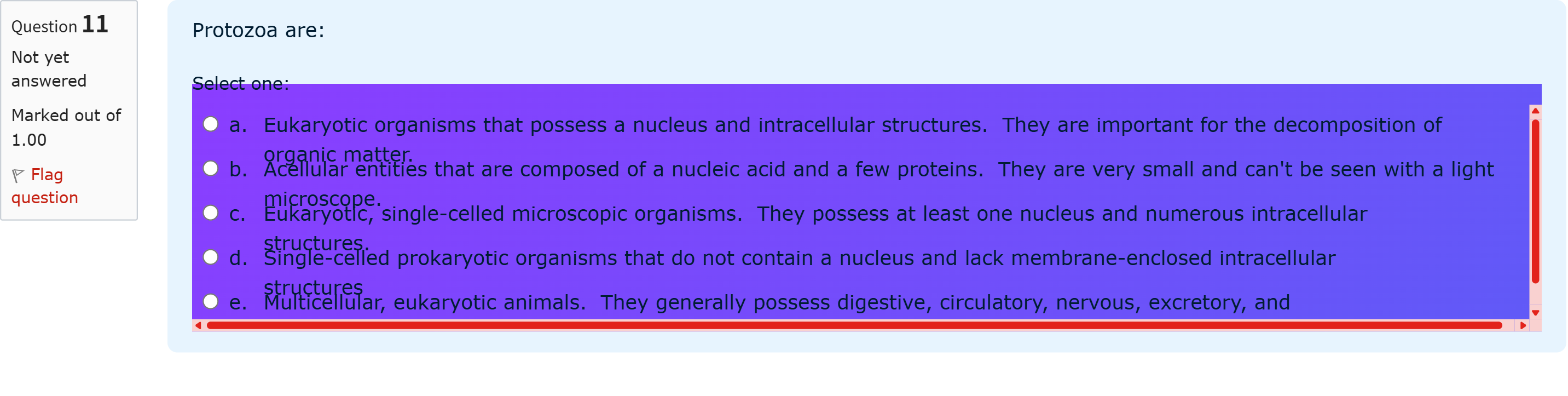
a. Eukaryotic organisms that possess a nucleus and intracellular structures. They are important for the decomposition of organic matter.
b. Acellular entities that are composed of a nucleic acid and a few proteins. They are very small and can't be seen with a light microscope.
c. Eukaryotic, single-celled microscopic organisms. They possess at least one nucleus and numerous intracellular structures.
d. Single-celled prokaryotic organisms that do not contain a nucleus and lack membrane-enclosed intracellular structures
e. Multicellular, eukaryotic animals. They generally possess digestive, circulatory, nervous, excretory, and reproductive systems.
Log in for full answers
We've collected over 50,000 authentic original questions and detailed explanations from around the globe. Log in now and get instant access to the answers!
Similar Questions
Protists can be described as ____________.
The first eukaryotes on Earth were the .
The term protist comes from a Greek word that reflects the observation that these organisms were Earth's eukaryotes.
True or False: Protista retain a unicellular classification, as they are unable to form tissue layers.
More Practical Tools for Students Powered by AI Study Helper
Making Your Study Simpler
Join us and instantly unlock extensive past papers & exclusive solutions to get a head start on your studies!