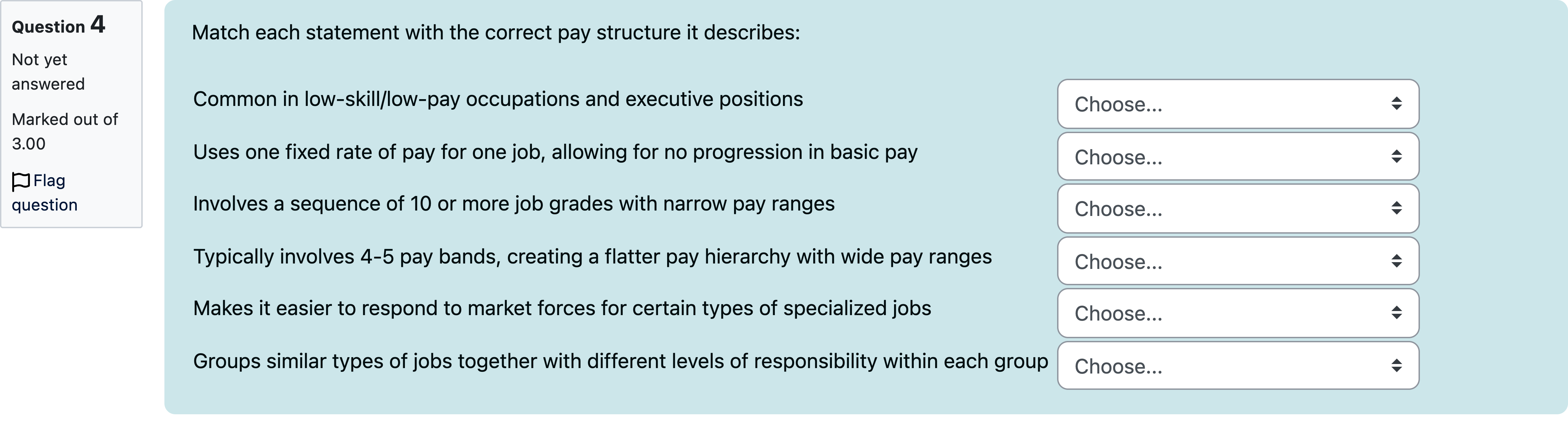
Match each statement with the correct pay structure it describes: 1: Common in low-skill/low-pay occupations and executive positions ____ 2: Uses one fixed rate of pay for one job, allowing for no progression in basic pay ____ 3: Involves a sequence of 10 or more job grades with narrow pay ranges ____ 4: Typically involves 4-5 pay bands, creating a flatter pay hierarchy with wide pay ranges ____ 5: Makes it easier to respond to market forces for certain types of specialized jobs ____ 6: Groups similar types of jobs together with different levels of responsibility within each group ____Matching
A
Narrow-graded structures
B
Broad bands
C
Job families
D
Spot salaries/individual pay rates
Log in for full answers
We've collected over 50,000 authentic original questions and detailed explanations from around the globe. Log in now and get instant access to the answers!
Similar Questions
Match each statement with the correct pay structure it describes: 1: Typically involves 4-5 pay bands, creating a flatter pay hierarchy with wide pay ranges ____ 2: Involves a sequence of 10 or more job grades with narrow pay ranges ____ 3: Makes it easier to respond to market forces for certain types of specialized jobs ____ 4: Groups similar types of jobs together with different levels of responsibility within each group ____ 5: Uses one fixed rate of pay for one job, allowing for no progression in basic pay ____ 6: Common in low-skill/low-pay occupations and executive positions ____
Question 30 Choose a, b, c or d as the best answer. The author’s main argument is that the 100:80:100 model __________.
The 100:80:100 model will most likely 25. ____ to more fields of work with productivity improvements. Businesses which continue with the traditional working week could have 26. ____ , and may be forced to agree to the model. They would need to do this to stay 27.____. The advantages of a reduced working week have been revealed by 28. ____ businesses. Future trials of the concept must include those 29. Answer Question 17[input] not surveyed in the first round.
The 100:80:100 model will most likely 25. ____ to more fields of work with productivity improvements. Businesses which continue with the traditional working week could have 26. ____ , and may be forced to agree to the model. They would need to do this to stay 27. ____. The advantages of a reduced working week have been revealed by 28. Answer Question 16[input] businesses. Future trials of the concept must include those 29. _________ not surveyed in the first round.
More Practical Tools for Students Powered by AI Study Helper
Making Your Study Simpler
Join us and instantly unlock extensive past papers & exclusive solutions to get a head start on your studies!